Digital printing technology has expanded rapidly across Europe, Southeast Asia and North America, bringing new challenges to lamination material production. Conventional standard coating formulas require activation temperatures above 160℃, which easily melts digital toner ink, causes pattern blurring, or deforms thin coated paper and photo substrates during thermal pressing. Factories catering to digital printing factories have developed dedicated low-temperature activated coating processes, adjusting EVA adhesive raw material formulas and oven curing parameters to deliver safe lamination performance for heat-sensitive printed materials.
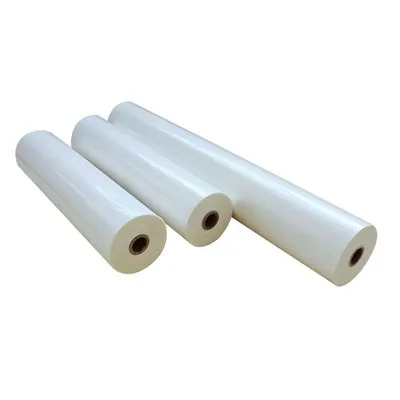
Thermal lamination film with custom low-temperature coating formula can achieve complete uniform bonding at 100-140℃, fully matching the temperature tolerance limits of digital inkjet prints, toner brochures and thin photo papers. The core technical adjustment lies in modifying the melt index of EVA hot melt particles during raw material mixing, adding low-viscosity polymer modifiers to reduce the required thermal activation threshold without sacrificing final adhesion strength after cooling. In the mixing workshop, raw EVA particles and functional modifiers are stirred under sealed constant temperature environments to avoid uneven formula distribution, which would lead to inconsistent activation temperature across a single film roll.
The coating and curing production lines for low-temperature variants adopt segmented temperature control ovens, with the front heating zone set 20-30℃ lower than standard film production workflows. Production technicians conduct real-time activation temperature testing on semi-finished rolls every 30 minutes, adjusting line speed and oven heat output to lock target melting parameters. Post-coating slow cooling processes are extended by 40% compared with ordinary film, to fully stabilize the modified low-melt adhesive layer and prevent premature adhesion during roll winding and storage. Finished products pass strict digital print simulation lamination testing before shipment, verifying no ink smudging, paper warping or pattern fading after thermal pressing.
Many overseas digital printing importers specifically request low-temperature coating variants for their daily production, as standard high-temperature films force them to slow down laminator line speed and increase defective printed product volume. Professional manufacturers separate low-temperature film production lines from standard product workflows to avoid formula cross-contamination and batch quality deviation. Targeted modified coating technology makes thermal lamination film a safe, high-efficiency finishing solution for global factories specializing in digital commercial printing.