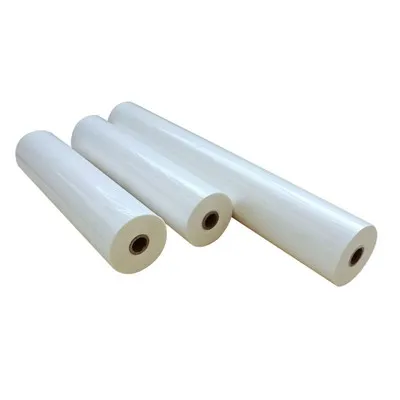
The production process of pre-coated films mainly includes several core steps: substrate preparation, coating formulation, coating application, and curing. First, the substrate must undergo rigorous surface treatment, including cleaning, degreasing, rust removal, and surface activation, to ensure coating adhesion and uniformity. Metal substrates are typically treated with phosphating or primer, while plastic substrates require removal of static electricity and surface impurities. Subsequently, resins, pigments, and additives are mixed in specific proportions to form a homogeneous coating solution; this step determines the film's weather resistance, corrosion resistance, and flexibility.
The coating process is a critical stage of production. Common processes include roller coating, spray coating, and dip coating, requiring uniform film thickness and a smooth surface. After coating, methods such as thermosetting, UV curing, or electron beam curing are used to form a stable protective film on the substrate surface. After curing, the film undergoes cooling, inspection, winding or cutting, and finally enters the packaging and storage stages. Throughout the entire production process, each step requires precise control of process parameters and quality inspection to ensure that the pre-coated film meets the expected standards in terms of durability, adhesion, and surface aesthetics, thus satisfying the usage needs of fields such as construction, home appliances, and transportation.