Europe's commercial printing industry operates some of the world's fastest and most sophisticated web-fed printing and finishing lines, where production speeds and efficiency expectations exceed those in many other global markets. Web-fed offset and digital printing plants across Germany, Italy, France and other European printing hubs run inline lamination processes at extremely high line speeds, requiring lamination films that can maintain consistent bonding, appearance and feeding performance under these demanding conditions. Standard commercial-grade lamination films frequently fail to perform reliably at European web-fed production speeds, causing costly production downtime and quality issues that printing plants cannot afford in their competitive market environment.
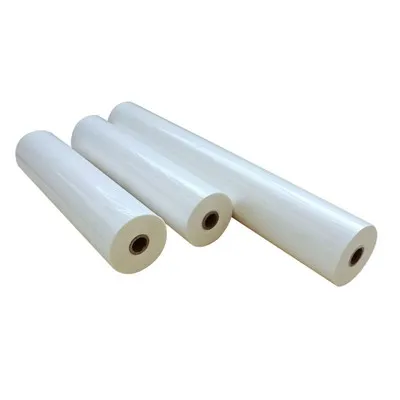
BOPP thermal lamination film engineered for high-speed European web-fed printing applications requires precise production tuning across multiple manufacturing parameters. The most critical adjustment involves adhesive formulation and coating weight control, where the EVA adhesive layer is optimized for ultra-fast activation and instant green strength development to match the short dwell times in high-speed laminating nips. The standard three-layer structure is maintained with BOPP substrate, prime coating and pure EVA adhesive, but each layer's application parameters are precision-tuned for high-speed compatibility. The prime coating is formulated to ensure instant, uniform wet-out on the BOPP surface at production speeds, while the adhesive coating thickness is controlled within extremely tight tolerances to prevent squeeze-out and roller contamination on high-speed laminating equipment.
Additional production tuning measures address specific requirements of European web-fed printing operations. Film flatness and tension uniformity are held to tighter specifications than standard grades, ensuring consistent feeding and tracking through high-speed inline systems. Surface slip properties are carefully adjusted through optimized top-coating formulations to provide just the right friction characteristics for reliable feeding without causing static buildup or marking issues. Winding parameters are precisely controlled to produce rolls with uniform tension from core to outer diameter, preventing telescoping and feeding problems that can occur with poorly wound rolls on high-speed equipment. European-grade films also undergo more extensive testing at production speeds, with quality verification performed on equipment simulating the high-speed conditions found in customer printing plants.
European web-fed printing plants report significant operational benefits from using properly tuned high-speed lamination films, including fewer production stops for film-related issues, more consistent lamination quality across long production runs and reduced waste from bonding failures or appearance defects. The higher material cost of precision-tuned high-speed film is readily offset by improved production efficiency, reduced downtime and higher overall equipment effectiveness. For film manufacturers, developing and maintaining high-speed product capabilities represents a significant technical barrier to entry, creating premium market positioning for suppliers that can meet European performance standards. As European printing technology continues advancing toward even higher production speeds, the demand for precision-manufactured high-speed BOPP thermal lamination film will continue to grow alongside the industry's efficiency expectations.