New Zealand's packaging industry has increasingly adopted water-based printing inks in recent years, driven by environmental regulations, workplace safety considerations and growing demand for sustainable packaging solutions from both domestic brands and export customers. Water-based inks offer significant environmental and safety advantages over solvent-based alternatives, but they can present lamination challenges due to different surface properties and adhesion characteristics. Packaging converters across New Zealand have identified specific lamination film formulations that provide reliable bonding to water-based ink prints, enabling them to maintain high quality standards while achieving their sustainability goals.
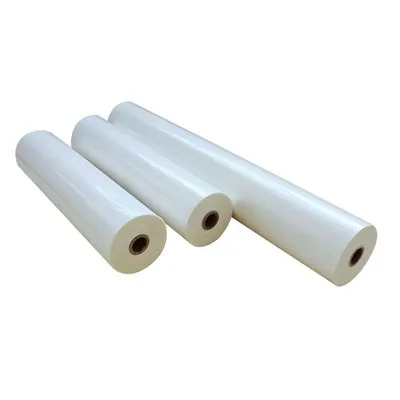
BOPP thermal lamination film formulated for water-based ink compatibility has become the preferred choice among New Zealand packaging converters committed to sustainable production practices. The compatibility is achieved through optimized prime coating formulations that provide excellent adhesion to water-based ink surfaces without requiring additional surface treatment or primer application. The standard three-layer structure is fully maintained-BOPP base film, water-based-ink-optimized prime coating and pure EVA heat-activated adhesive-ensuring that all fundamental lamination properties remain intact while specifically addressing the adhesion challenges presented by water-based ink prints. All surface finish properties are achieved through independent top-coating layers, maintaining the pure composition of the adhesive system for reliable bonding performance on water-based printed substrates.
New Zealand packaging converters benefit from water-based ink compatible films in several ways that support their operational and environmental objectives. Reliable adhesion eliminates the need for pre-treatment processes such as additional corona treatment or primer application, simplifying production workflows and reducing processing costs. The ability to laminate directly to water-based ink prints enables converters to fully realize the environmental benefits of water-based inks without compromising lamination quality or adding extra production steps. Workplace safety improves as well, with both water-based inks and modern lamination films contributing to lower VOC emissions in production facilities. For New Zealand exporters, using water-based ink compatible lamination supports their environmental claims and helps meet the sustainability requirements of international customers, particularly in European and North American markets.
New Zealand brands and packaging buyers benefit from this technology through more sustainable packaging options that still deliver high quality and performance. Packaging produced with water-based inks and compatible lamination films maintains its appearance and protective properties while carrying a smaller environmental footprint, aligning with the growing consumer preference for sustainable products. For the New Zealand packaging industry as a whole, the adoption of water-based ink compatible lamination supports the sector's transition to more environmentally responsible manufacturing practices. Film manufacturers that develop and supply water-based ink compatible products gain strong market positioning in New Zealand, where environmental consciousness continues to grow among both businesses and consumers. As New Zealand's packaging sector continues to advance its sustainability agenda, water-based ink compatible BOPP thermal lamination film will remain an important enabling technology for the industry's green transformation.