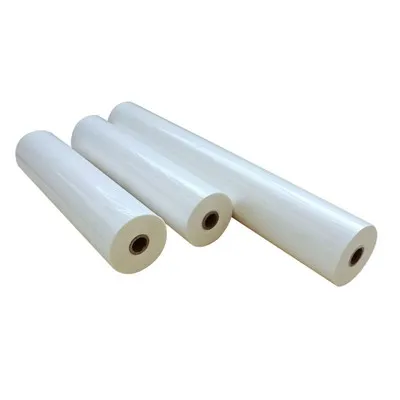
Printing companies and in-house production departments frequently encounter performance issues when using lamination films that are not properly matched to their specific equipment type. Mismatched film specifications can cause problems including poor bonding, frequent jams, uneven gloss appearance and excessive wear on laminator rollers. With so many different laminator models available on the market, ranging from small desktop office machines to high-speed industrial production lines, understanding how to match film specifications to equipment capabilities is essential for achieving consistent quality and production efficiency.
Thermal lamination film selection should begin with understanding the specific characteristics and operating parameters of the roll laminator being used. The first consideration is machine speed: low-speed office and entry-level commercial laminators operate at relatively slow speeds with longer dwell times, requiring films with standard activation temperatures and thicker adhesive coatings to ensure proper bonding. High-speed industrial laminators, by contrast, run at much faster line speeds with shorter heating zone exposure times, requiring films with faster-activating adhesive formulations and more precise coating thickness control to achieve reliable bonding at production speeds. The three-layer film structure remains consistent across all grades, with substrate, prime coating and pure EVA adhesive layer optimized for specific speed ranges through adhesive formulation adjustments rather than additive mixing.
The second matching consideration involves laminator roller configuration and pressure capabilities. Laminators with silicone rubber rollers generally work well with most standard film types, while machines with hard chrome rollers may require specific film grades to prevent slippage or marking issues. Machine pressure capacity affects bonding performance as well: lighter-duty office laminators with lower pressure settings work best with thinner, more flexible BOPP films that bond easily with minimal pressure. Heavy-duty industrial laminators with high pressure capabilities can handle thicker PET films and specialty functional films that require greater pressure for proper adhesion. Core size compatibility is another practical consideration, as different laminator models are designed for specific core diameters and maximum roll widths.
The third matching factor covers application requirements and finish preferences. Gloss, matte and satin finishes are all available in grades matched to different equipment types, allowing buyers to select the desired appearance without sacrificing production compatibility. Special functional films such as anti-scratch, soft-touch and anti-fingerprint variants also come in equipment-specific grades optimized for different speed and pressure ranges. Working with knowledgeable film suppliers that understand different laminator equipment characteristics helps buyers select the right film grade for their specific machines. Proper film-to-equipment matching reduces production waste, minimizes machine downtime and ensures consistent, high-quality results across all production runs. Understanding these matching guidelines helps production managers select the optimal thermal lamination film grade for every roll laminator in their operation.