Industrial finishing material manufacturers rely on standardized layered coating workflows to eliminate common defects such as poor adhesion, uneven gloss and batch inconsistency. Most entry-level factories adopt simplified dual-layer production lines, while top-tier certified manufacturers implement full three-layer composite technology, which has become the mainstream standard for export-grade finishing supplies targeting European, North American and Southeast Asian buyers. The complete three-layer system consists of rigid BOPP/PET base substrate, adhesion booster prime coating, and evenly distributed heat-activated EVA adhesive layer, with each production link requiring independent precision parameter control and offline quality sampling inspection.
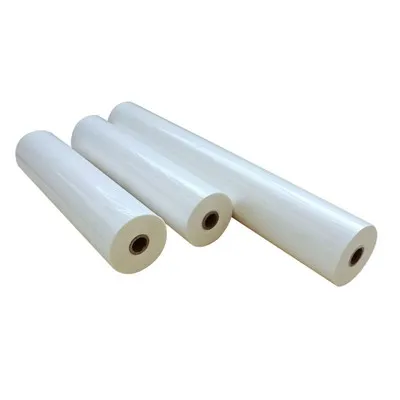
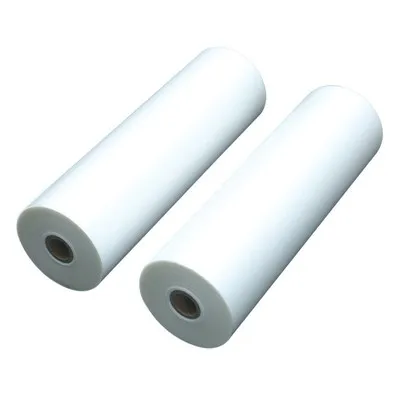
Thermal lamination film manufactured under full three-layer coating standards delivers far more stable physical performance than simplified single or dual-layer alternatives. The entire production sequence starts with substrate surface plasma pretreatment, a core process that removes surface static and tiny dust particles to maximize the bonding force between base film and prime coating. Without this plasma treatment step, micro-separation and bubble defects frequently emerge after lamination, leading to high reject rates for printing and packaging factories. After plasma activation, automated micro-coating equipment evenly spreads the prime coating at a constant coating weight, eliminating thick-thin deviation on wide-format film rolls that plagues low-end production lines.
Temperature control precision is critical during the EVA hot melt adhesive coating stage. Professional production workshops maintain a constant oven temperature range of 110-130℃, with real-time infrared sensors monitoring surface heat distribution across the entire film width. Once triple-layer coating and constant-temperature curing are finished, semi-finished products enter slow cooling workshops to release internal stress, which effectively prevents film curling and shrinkage deformation during later slitting and customer application. Every 2000-meter semi-finished roll undergoes laboratory testing to check adhesion strength, flatness and activation temperature before moving to the slitting workshop.
Many overseas bulk buyers explicitly require three-layer process certification when auditing Chinese film factories, as this production standard directly reduces their post-lamination defective product losses. Factories that skip prime coating steps often offer lower unit prices but bring hidden quality risks for long-term cooperative clients. Strict full-process parameter locking and multi-stage offline testing ensure every finished roll of Thermal lamination film meets international export standards, helping printing and packaging manufacturers cut waste and stabilize their own finished product quality in mass production cycles.