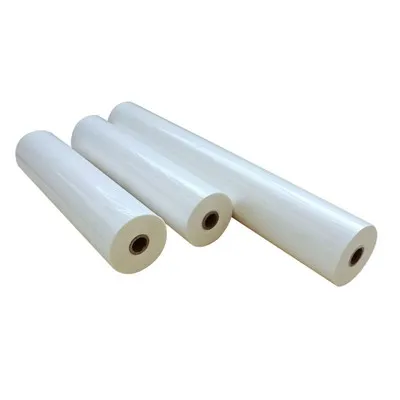
Poor interlayer adhesion remains one of the most frequent quality complaints raised by overseas importers of finishing films. Many small-scale manufacturers ignore surface activation treatment before coating, relying only on basic mechanical cleaning to process BOPP and PET substrates. Due to the inherent low surface tension of polyolefin materials, direct adhesive coating leads to weak interlayer bonding, causing delamination, edge peeling and transparent bubbles after thermal pressing on printed paper substrates. Advanced large-scale production factories have fully deployed online plasma pretreatment equipment to solve this fundamental material performance problem at the front end of production lines.
Thermal lamination film produced with integrated plasma pretreatment features drastically enhanced surface tension on the base substrate, creating a tight chemical bond between prime coating and base film instead of weak physical attachment. The plasma treatment chamber generates low-temperature ionized air to bombard the film surface at a consistent linear speed, removing static electricity, micro oil stains and invisible dust that stick to raw BOPP/PET rolls during storage and transportation. This process does not alter the original thickness, transparency or stiffness of the substrate, making it compatible with all gloss, matte and soft-touch functional film variants for commercial printing and luxury packaging.
Production line operators must calibrate plasma power and film feeding speed according to different substrate types. PET base materials require slightly higher ion power to achieve ideal surface activation, while thin 12-20 micron BOPP films need slower conveying speed to avoid surface scratch damage. After plasma activation, the film immediately enters the prime coating unit without air exposure, preventing secondary dust contamination that would invalidate the pretreatment effect. All parameter records of plasma power, line speed and chamber temperature are stored for batch traceability, which is mandatory for BSCI and ISO certified export factories serving European brand clients.
For end-users such as book printing factories and cosmetic packaging manufacturers, plasma-treated rolls cut defective rates by over 70% compared with untreated alternatives, eliminating rework labor and wasted printed materials. This front-end production investment significantly improves long-term supply stability for cross-border bulk importers, who prioritize consistent adhesion performance over marginal unit price differences. The permanent surface activation effect brought by plasma pretreatment makes thermal lamination film the preferred high-adhesion finishing material for high-standard global printing and packaging production lines.