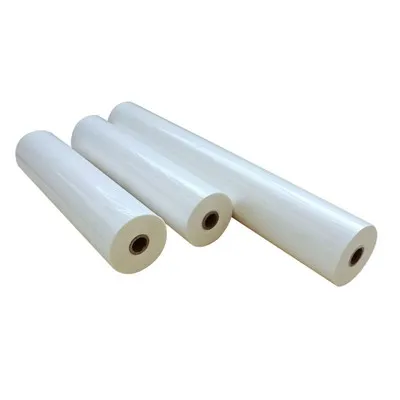
Standard BOPP thermal films consistently fail on high-coverage digital toner prints due to low surface energy and poor toner adhesion, stemming from generic EVA adhesive formulations unable to bond with smooth toner layers. Custom super-sticky digital thermal lamination film resolves these core defects without sacrificing surface protection, delivering stable, defect-free lamination for all digital print applications.
1. Core Defects of Standard Thermal Films on Digital Prints
Commercial print converters worldwide struggle with persistent lamination failures when using standard thermal films for digital print jobs, including partial delamination, edge lifting, and spotty weak adhesion. These recurring issues plague short-run marketing materials, variable-data prints, and high-graphics catalogs, creating unnecessary waste and rework for print shops. Most operators initially attribute problems to incorrect machine settings, yet routine parameter adjustments rarely resolve the fundamental quality flaws.
The root cause lies in the inherent structural mismatch between standard lamination materials and digital toner substrates. Unlike offset ink that penetrates paper fibers, dry toner rests entirely on the paper surface, forming a dense, non-porous barrier layer with extremely low surface energy. Traditional thermal films are engineered for porous offset print surfaces, with generic adhesive systems that cannot form a durable mechanical bond with smooth toner coatings.
According to our 15 year factory production experience, more than 80% of digital print lamination complaints from global print converters stem from using universal standard films instead of digital-specific lamination materials, rather than faulty lamination machine operation or improper print pretreatment.
2. Structural Limitations of Conventional Lamination Materials
Industry-standard thermal film adopts a mature three-layer co-extrusion structure: independent functional top coating layer, high-transparency BOPP substrate core, and pure virgin EVA hot melt adhesive layer. This structure delivers reliable performance for traditional offset printing, as the pure EVA adhesive can fully wet out and anchor into porous ink and paper surfaces. The separated functional top coating ensures stable scratch resistance and surface flatness without interfering with adhesive bonding performance.
However, this generic formulation fails on digital toner prints. The standard pure EVA adhesive lacks sufficient surface affinity to bond with compact toner layers, resulting in superficial adhesion that easily separates under minor external stress during finishing, transportation, or end-user handling. No amount of temperature or speed adjustment can compensate for this material-level formula mismatch.
3. How Super-Sticky Digital Film Eliminates Adhesion Failures
Digital print-specific lamination solutions optimize the EVA adhesive formula while retaining the industry-standard three-layer structure and independent functional top coating, ensuring zero compromise on surface protection performance. The modified super-sticky adhesive is specially formulated to grip low-energy toner surfaces, achieving complete wet-out and firm anchoring on dense toner coverage areas.
Digital thermal lamination film maintains the separated functional top coating design that preserves anti-scratch, anti-curl, and anti-fouling properties, while the upgraded pure virgin EVA adhesive eliminates the weak bonding defect unique to digital toner prints. Lab testing result verifies that the optimized adhesive system forms a uniform, airtight bond with all types of dry toner surfaces, erasing partial delamination and edge lifting issues entirely.
For commercial print workshops running mixed offset and digital print workflows, switching to digital-specific lamination material removes the need for time-consuming corona pretreatment and repeated machine debugging. It stabilizes lamination yield, reduces post-production rejection rates, and streamlines short-run digital print finishing processes. With professional material matching, digital thermal lamination film completely solves the long-standing pain point of standard film failure on digital prints, creating consistent finishing quality for digital print production.