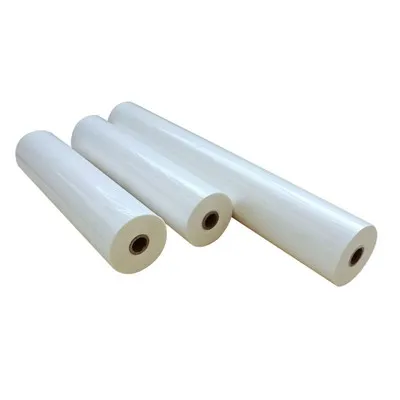
Bubbling and peeling on heavy toner digital prints are caused by toner degassing, trapped air, and insufficient adhesive wet-out. Professional digital-specific lamination film paired with standardized pre-production and machine operation processes completely eliminates these common finishing defects for high-toner print jobs.
1. Root Causes of Bubbling and Peeling on Heavy Toner Prints
Heavy toner coverage digital prints, including premium catalog covers, high-density graphic flyers, and custom promotional cards, are the most error-prone products in print finishing workshops. The two most common quality defects are surface bubbling and long-term edge peeling, which severely reduce finished product qualification rates and increase operational costs for short-run print orders.
According to our 15 year factory production experience, these defects are not caused by single machine error, but by the combined influence of toner surface characteristics, material adaptability, and pre-production processing. Thick toner layers form uneven micro-topography on paper surfaces and retain trace volatile components after fusing. Under lamination heat and pressure, these volatiles release to form bubbles, while the inert toner surface prevents ordinary adhesive from forming a tight bond, leading to peeling after cooling.
2. Material Defect of General-Purpose Thermal Films
Standard thermal films follow the unified industry three-layer specification: independent functional top coating, BOPP substrate core, and pure virgin EVA adhesive layer. While structurally compliant, their generic EVA adhesive formulas are not optimized for heavy toner substrates. The conventional adhesive cannot flow rapidly enough to fill micro gaps on uneven toner surfaces or seal volatile gas release, making bubbling and peeling inevitable on high-coverage digital prints.
The independent functional top coating of standard films focuses only on surface protection, lacking supporting formula compatibility with heavy toner bonding scenarios. This material mismatch is the core reason why most print workshops cannot resolve finishing defects despite repeated machine parameter adjustments.
3. Systematic Solutions for Defect-Free Lamination
Lab testing result confirms that targeted material upgrade is the primary solution to eliminate heavy toner lamination defects. Digital print dedicated digital thermal lamination film optimizes the melt flow performance of pure virgin EVA adhesive, enabling rapid wet-out and gap filling on uneven heavy toner surfaces. The upgraded adhesive effectively seals micro-volatiles released by toner during heating and forms a firm mechanical anchor with toner particles.
Coordinated process specifications further consolidate finishing quality. Printed sheets must be fully cooled and naturally dried before lamination to eliminate residual volatile components in fused toner. Lamination temperature and speed should be moderately calibrated to avoid excessive heating that triggers toner degassing, while ensuring sufficient thermal dwell time for adhesive melting and spreading. Reasonable roller pressure discharges trapped air between film and paper substrates.
Post-lamination cooling management is also essential. Finished products cannot be stacked immediately after processing, as residual heat and internal stress will induce later-stage edge peeling. The independent functional top coating of digital thermal lamination film retains excellent scratch resistance and flatness, ensuring perfect surface quality while solving bonding defects. This combined material and process system completely eradicates bubbling and peeling issues for heavy toner digital print finishing.