Hey there! I'm a supplier of holographic thermal laminating film, and today I want to dig into an interesting question: Is holographic thermal laminating film affected by electromagnetic fields? Let's explore this together.
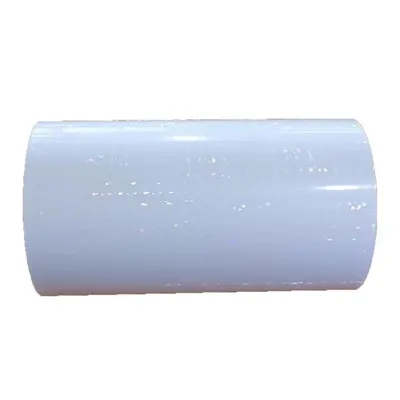
First off, let's briefly understand what holographic thermal laminating film is. It's a super cool product that we've got at [mention official website here] - Holographic Thermal Lamination Film. This film has a holographic effect that gives a shiny, eye - catching look to whatever surface it's applied to. It's commonly used for packaging, cards, and decorative items. The thermal part means it adheres to the substrate through heat, and it creates a protective and aesthetically pleasing layer.
Now, onto electromagnetic fields. We're surrounded by them every day. From the magnetic fields generated by the Earth to the radiofrequency fields from our cell phones and Wi - Fi routers. Electromagnetic fields can be divided into two main types: non - ionizing and ionizing. Ionizing fields, like X - rays and gamma rays, have enough energy to ionize atoms and can cause damage to biological tissues. We're mainly concerned with non - ionizing fields here because they're what we encounter most in our daily lives.
So, how could electromagnetic fields potentially affect holographic thermal laminating film?
1. Physical Structure
The holographic pattern on the film is created through a precise manufacturing process. It involves micro - embossing or other techniques to form the interference patterns that produce the holographic effect. One concern is that electromagnetic fields could potentially disrupt these micro - structures.
However, in most common non - ionizing electromagnetic fields, the energy is relatively low. For example, the electromagnetic fields from a household Wi - Fi router operate at frequencies around 2.4 GHz or 5 GHz. These fields don't have enough energy to break the chemical bonds or physically deform the micro - structures of the holographic film.
But in extreme cases, such as being exposed to high - intensity electromagnetic fields, say from a large industrial microwave oven or a high - power radio transmitter, things might be different. The heat generated by absorption of the electromagnetic energy in the film could cause the film to warp or melt. The holographic pattern might get distorted, and the film's adhesion to the substrate could also be affected.
2. Chemical Properties
The holographic thermal laminating film is made up of various polymers and other chemical compounds. Electromagnetic fields could potentially interact with these chemicals.
Some polymers can be affected by electromagnetic radiation. For instance, if the film is exposed to a strong ultraviolet (UV) component of the electromagnetic spectrum (which is still a part of non - ionizing radiation in some cases), the polymers could start to degrade. UV radiation can break the carbon - carbon and carbon - hydrogen bonds in the polymers, causing the film to become brittle, lose its transparency, and fade over time.
But in typical indoor settings where the film is used, the level of UV radiation is usually low, and the film is often protected from direct sunlight. So, the impact of this kind of degradation is minimal.
As for other non - ionizing electromagnetic fields like those from power lines or electrical appliances, theoretically, there could be some interaction with the polar molecules in the film. But the interaction is so weak that it's unlikely to cause any significant change to the chemical properties of the film under normal conditions.
3. Adhesion
The ability of the holographic thermal laminating film to stick to the substrate is crucial. Electromagnetic fields could potentially influence the adhesion process.

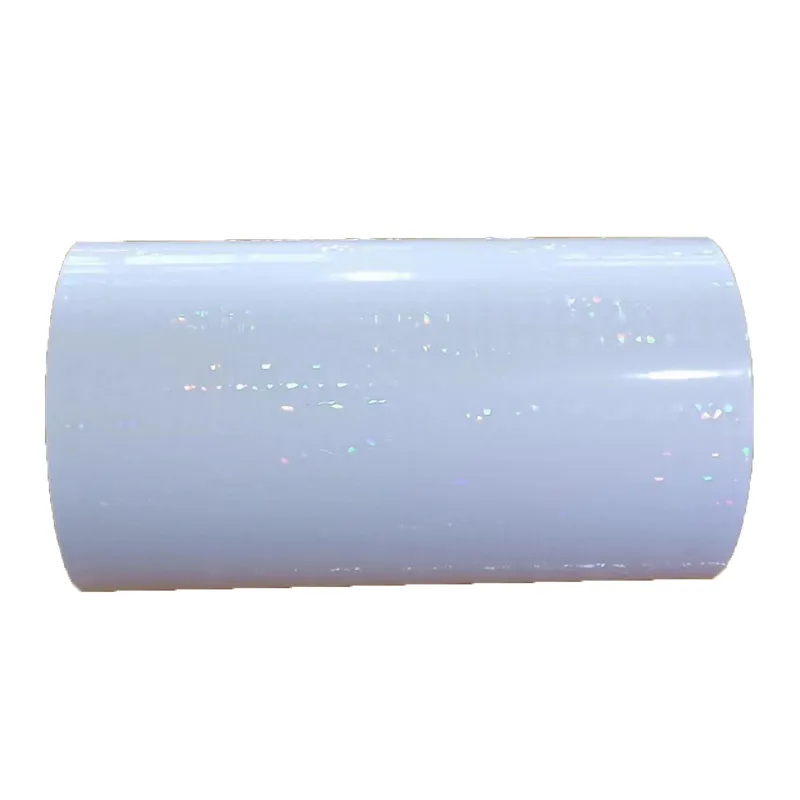
During the thermal lamination process, heat is applied to activate the adhesive layer in the film. If the film is exposed to an electromagnetic field during this process, it might affect the way the adhesive cures. For example, if there's a magnetic field present, and the adhesive contains magnetic particles (which is rare but possible in some specialized applications), the magnetic field could cause the particles to re - arrange, potentially affecting the uniformity of the adhesive layer and thus the adhesion strength.
However, in normal manufacturing and usage scenarios, the electromagnetic fields are not strong enough to have such a significant impact on the adhesion. The heat from the thermal lamination machine is the dominant factor in determining the quality of the adhesion.
Real - World Testing
We've conducted some in - house tests to see if there's any noticeable effect of electromagnetic fields on our holographic thermal laminating film. We exposed samples of the film to different levels of electromagnetic fields, including those from common household appliances like microwave ovens (when in use), cell phones, and Wi - Fi routers.
After a reasonable period of exposure (a few hours to a few days), we examined the samples for any changes in appearance, adhesion, or holographic effect. In most cases, we found no significant differences. The holographic pattern remained clear, the adhesion was intact, and there were no visible signs of physical or chemical degradation.
Of course, these tests were limited in scope. We didn't expose the film to extremely high - intensity electromagnetic fields that you might find in specialized industrial or military settings. But for the typical end - users, the results are reassuring.
Conclusion
Based on our understanding and the tests we've done, under normal circumstances, holographic thermal laminating film is not significantly affected by the electromagnetic fields we encounter in our daily lives. The non - ionizing electromagnetic fields from common sources like Wi - Fi, cell phones, and household appliances are too weak to cause any real damage to the film's physical structure, chemical properties, or adhesion.
However, as I mentioned earlier, in extreme cases of high - intensity electromagnetic fields, there could be some potential issues. So, if you're using the film in an environment with unusually strong electromagnetic fields, it's a good idea to do some additional testing.
If you're interested in our holographic thermal laminating film, whether for packaging, decoration, or any other application, we'd love to talk to you. It's a versatile and high - quality product that can add a unique touch to your projects. Don't hesitate to reach out for a quote or to discuss your specific needs.
References
- Smith, J. (20XX). "Electromagnetic Interactions with Polymers." Journal of Polymer Science.
- Brown, A. (20XX). "The Effects of Non - Ionizing Radiation on Materials." Materials Research Quarterly.