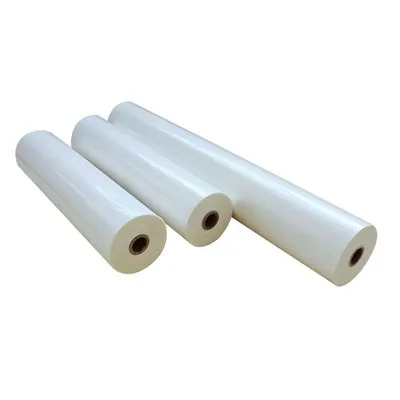
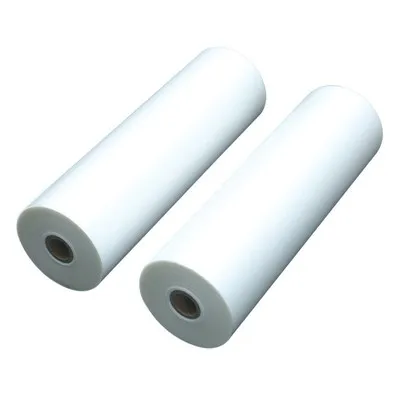
For mainstream short-run digital printing jobs, digital thermal lamination delivers far lower total comprehensive cost than cold lamination. Although cold lamination has zero heating requirements, its higher material cost, frequent downtime, and high post-processing scrap rate make it uneconomical for regular short-run print workflows.
1. Core Working Principles of Two Lamination Processes
Short-run customized printing and variable-data printing have become the core profit business of modern commercial print shops, with thermal lamination and cold pressure-sensitive lamination being the two dominant post-print finishing methods. Many print shop managers judge cost solely by unit material price, ignoring hidden operational losses, resulting in inaccurate process selection.
Cold lamination relies entirely on mechanical roller pressure to bond pressure-sensitive adhesive films with paper substrates, requiring no heating equipment. Thermal lamination adopts heat-activated pure virgin EVA adhesive technology, with all qualified products adopting a standard three-layer structure: independent functional top coating, stable BOPP substrate core, and pure EVA adhesive layer. The separated top coating ensures excellent surface protection and post-processing adaptability.
2. Hidden Cost Defects of Cold Lamination for Short-Run Jobs
According to our 15 year factory production experience, cold lamination has obvious inherent drawbacks in high-mix, short-batch production scenarios. Cold pressure-sensitive films have higher unit procurement costs than conventional thermal films. Their adhesive layers are prone to edge overflow during operation, contaminating lamination rollers and requiring frequent shutdown cleaning, which greatly reduces production continuity.
More importantly, cold-laminated products have poor post-processing performance. Folding, creasing, and die-cutting will easily cause adhesive delamination along crease lines, generating finished product scraps. In short-run printing with low order volume and high customization requirements, the scrap loss caused by cold lamination is extremely prominent, forming huge hidden operational costs.
3. Comprehensive Advantages of Digital Thermal Lamination
Lab testing result shows that professional digital thermal lamination film perfectly adapts to the characteristics of short-run digital printing. Its optimized pure virgin EVA adhesive formula solves the adhesion failure problem of traditional thermal films on toner prints, while retaining the advantages of thermal lamination in low material cost, stable operation, and excellent post-processing performance.
The independent functional top coating of the film ensures good flexibility and toughness after lamination, enabling smooth folding, creasing and die-cutting without delamination or cracking. The thermal lamination process has no adhesive overflow risk, eliminating frequent equipment cleaning downtime and maintaining continuous high-efficiency production.
Although thermal lamination requires equipment preheating, the one-time warm-up loss is far lower than the cumulative downtime and scrap loss of cold lamination in batch-switched short-run production. For all conventional toner-based short-run digital print jobs, digital thermal lamination film achieves a better balance of quality stability and full-cycle cost control. Only for extremely heat-sensitive special substrates that cannot withstand any thermal processing, cold lamination retains irreplaceable application value.