Vietnam's printing and packaging industry has experienced remarkable growth in recent years, with film converters and lamination service providers expanding production capacity to serve both domestic demand and export markets. However, the country's distinct seasonal temperature variations, with hot summers and cooler winter periods particularly in northern regions, create challenges for maintaining consistent shrinkage properties in lamination films. Dimensional stability is critical for printing applications where misalignment can ruin entire production runs, making shrinkage control a key quality parameter that Vietnamese converters must manage year-round.
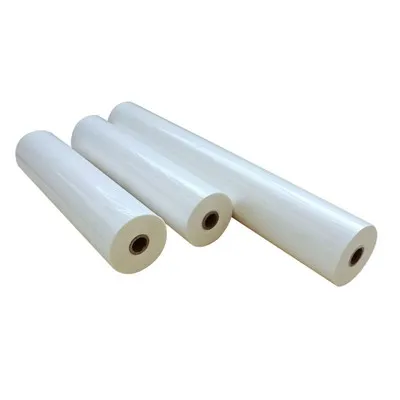
BOPP thermal lamination film with low-shrinkage properties requires careful production control to maintain consistent performance through Vietnam's seasonal temperature fluctuations. The primary stabilization approach involves multi-stage annealing processes during film manufacturing, where the BOPP base film undergoes controlled heat treatment to relieve internal stresses that could cause post-lamination shrinkage. The standard three-layer coating structure is preserved, with prime coating and pure EVA adhesive applied under carefully controlled temperature conditions that prevent introducing additional stress into the film. Production facilities in Vietnam often maintain temperature-controlled coating and curing zones to ensure that all three layers are applied and cured under consistent thermal conditions, regardless of external seasonal temperature variations.
Vietnamese converters implement several additional practical measures to stabilize shrinkage performance. Raw material conditioning procedures ensure that incoming BOPP base film acclimates to production environment temperatures before coating begins, preventing thermal shock that could affect dimensional properties. Production scheduling aligns high-precision low-shrinkage film runs with periods of more stable ambient temperatures, typically during early morning and night shifts when factory temperatures are more consistent. Finished film rolls undergo extended conditioning in temperature-controlled warehouses before shipment, allowing any residual dimensional changes to occur before the product reaches customers. Regular shrinkage testing at multiple temperature points provides converters with comprehensive data on how their products perform across different seasonal operating conditions.
Printing and packaging customers in Vietnam benefit significantly from these stabilization efforts, experiencing fewer registration issues and less post-lamination dimensional distortion even when production schedules span different seasons. Film converters that master low-shrinkage stabilization techniques gain strong competitive advantage in the domestic market, particularly for high-precision applications such as label production and packaging where dimensional accuracy directly affects production yield. For international buyers sourcing from Vietnamese suppliers, understanding these seasonal stabilization practices helps evaluate supplier capability and set appropriate quality expectations. As Vietnam's printing industry continues to mature and pursue higher value-added applications, consistent low-shrinkage performance of BOPP thermal lamination film will remain essential for supporting the sector's quality advancement.